Studies consistently show that parental involvement in education is critical to a child’s success.
I’m delighted to read about the recent trend in Black Home Schooling. I’m for anything that empowers parents to take charge of their children’s education.
As a certified Scholastic teacher, I was taught that parents are their children’s first teacher. I really didn’t need a certificate to tell me that. It’s common sense.
Children learn how to talk and other early skills from their parents. If the pandemic has taught us anything, most parents are up to the challenge of educating their children.
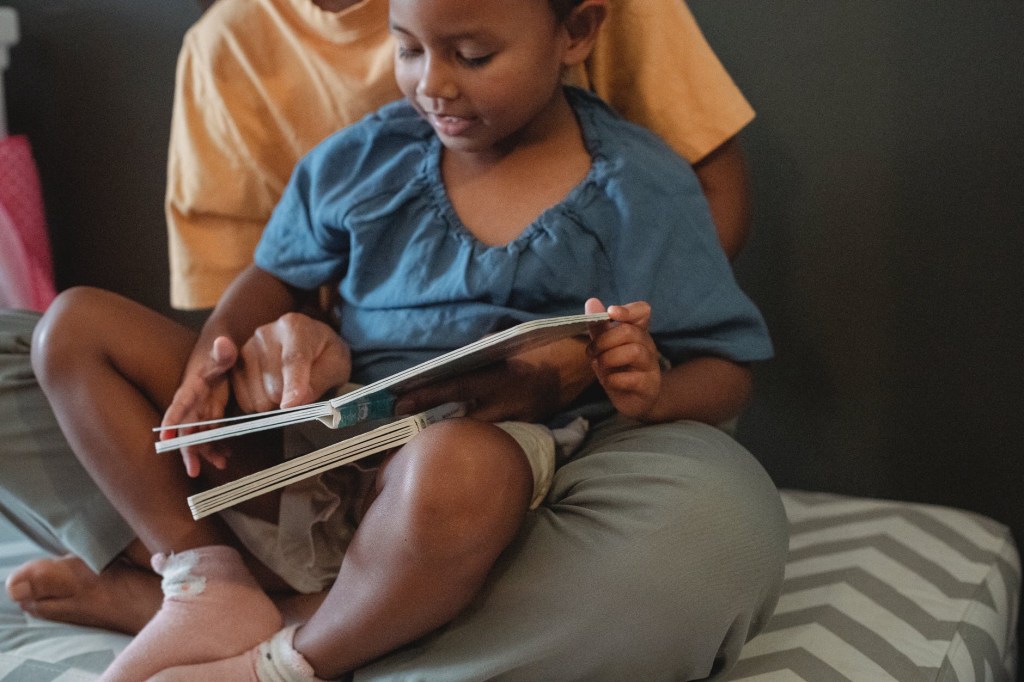
Imagine what your child will know by sending 20 minutes each day with his or her face buried in a good book.
One of the truest predictors of future success is the amount of reading that children do at a young age. The amount of time children read and are read to predicts whether they will be successful.
Surprisingly, parents and children do not have to read for hours each day; they only need to read for 20 minutes each day. With 20 simple minutes of reading, students are exposed to over 1,000,000 words in the course of a school year. In comparison, children who read for five minutes per day are exposed to a paltry 8,000 words each year.
Imagine what your child will know by sending 20 minutes each day with his or her face buried in a good book.
Studies show that there is a correlation between art and other achievements.
“Every child is an artist. The problem is how to remain an artist once one grows up.” I love this quote by Picasso. It brings to mind the precious first drawings my three children created during childhood. I was distraught the other day when one of these fragile keepsakes began to tear inside of a frame. It seems the backing of the frame had come apart along with the drawing.
Society is often good at destroying creativity as well. As children grow up, creativity is often discouraged. Creativity while fragile is the backbone of society. When archeologists study past cultures they often gauge their development by the complexity of the art produced.
There is hope. Many schools have Science, Technology, Art and Math (STEAM) curricula. Creativity is a great way to keep students engaged especially now that so many students are studying online.
Studies show that there is a correlation between art and other achievements. A report by Americans for the Arts states that young people who participate regularly in the arts (three hours a day each week through one full year) are four times more likely to be recognized for academic achievement, to participate in a math and science fair or to win an award for writing an essay or poem than children who do not participate.
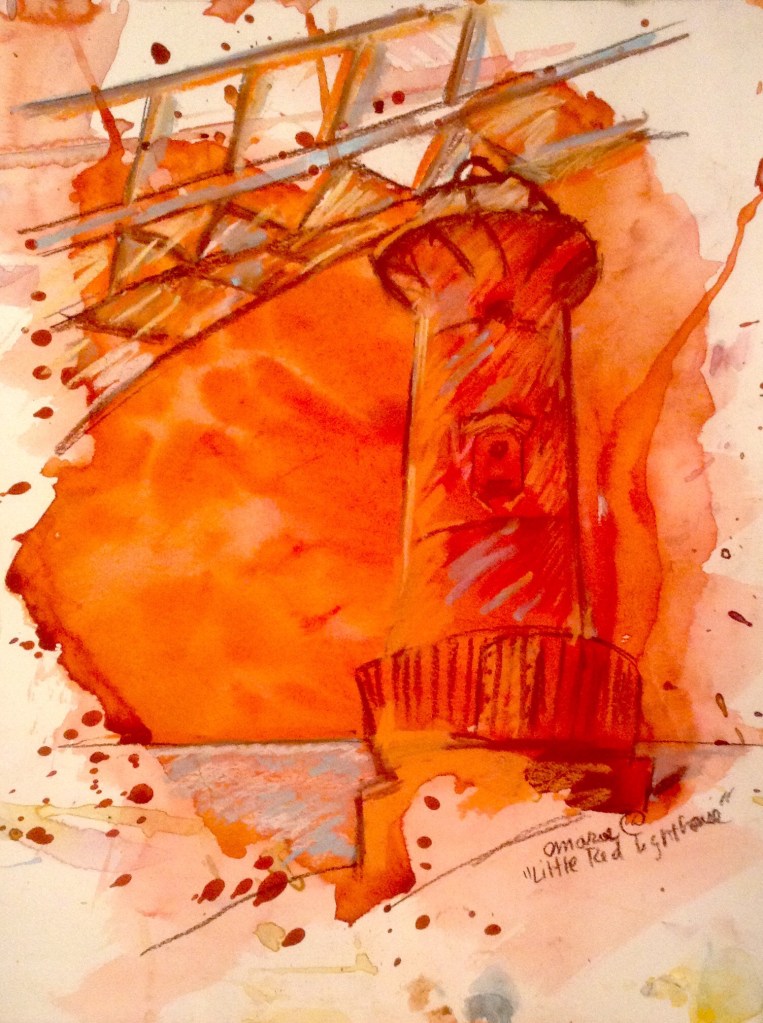
The iconic Jeffrey’s Hook lighthouse rose to fame due to the popularity of the book “The Little Red Lighthouse and the Great Gray Bridge” by Hildegarde W. Swift and Lynd Ward. This story was so compelling that it inspired hundreds of children to write letters that saved lighthouse. I love books that inspire children to make a difference. Taking a clue from the book I included the bridge in my painting of the lighthouse.
This workshop engages children in an exciting exploration of art and social science. Children will learn about civic responsibility, the role of government and how they can make a difference.
EDUCATION STANDARDS
SS.KA2.3 Listen to and retell stories about people in the past who have shown character ideals and principles including honesty, courage and responsibility.
SS.K.E.1.3 Describe different kinds of jobs that people do and tools or equipment used.
SS.1.A.2.2 Compare life now and in the past.
SS.1.C.1.2 Give examples of people who have the power and authority to make and enforce rules and laws in the community.
SS.2.E.1.3 Recognize that the United States trades with other nations to exchange goods and services.
VA.1.2.3.4.5 Develop the skill to use art to organize objects sequentially.
LAF.1.W.1.2 Write information in which they name a topic, supply some facts about the topic.
Length 1 ½ – 2 hours
Topic: The Role of lighthouses and light keepers
Objective
Children will learn how lightkeepers and lighthouses contribute to the welfare and economic well-being of the United States. Students will discover the function of lighthouses such as warning against visible shipping hazards. They will learn the role of government and how to impact their neighborhood and the world around them.

 Multicultural Art 4 Kids