If there is an American Dream reading is one of the bootstraps by which we can all pull ourselves up. Karin Slaughter.

We live in text based history more than any other time. We actually have trouble not reading. But adults aren’t reading books.

Placing the blame on technology and the educational system gives adults excuses for not engaging with their kids.
Parents can raise children who read by actually reading a book. This teaches kid that reading is important. Reading with a child teaches them that they are important.

The Pandemic is a great opportunity to the boost the literacy rates in the United States. Modern jobs demand a high level of literacy. I’m not talking about scanning or skimming an article on the internet. According to the National Institute for Literacy, the ability to read, write and speak in English, compute and solve problems are the what literacy is about.

In this age of computers and smart phones, reading to your child is more important than ever. Studies show that technology has made people lonelier than ever.

Sending a text is not the same as talking to someone. We now have the option of being close to everyone and no one at the same time. Reading a book is face.
When faced with a new project, it’s common to seek subject matter experts for guidance. When I began the task of illustrating my Miami Beach Art Deco coloring book, I sought the advice of my five year old grandson. As I worked on my thumbnail sketches, he noted, “Grammy, books have spines.” This was the first of his insightful remarks.

When I came back with my drawings he observed, “You don’t have any people in it. You need to draw some kids doing fun things.” “Well, I do see people walking their dogs…” “Yes, what about a parachute…this sky looks empty.” “I don’t see parachutes at South Beach but I do see parasails.” “What’s that?” he inquired. Not sure that I could explain it, I drew a sketch. “Cool!” he replied. “I guess I could draw some clouds in the sky,” I offered.

“I want to draw on this robot.” I decided to include dashed lines for tracing instead of making it a static object. “This building needs something.” “I did leave out some windows,” I explained. So much for my first edit…
I literally went back to the drawing board and returned with the changes he suggested. “Where’s the parachute?” he insisted. “Well, I drew clouds instead.” He wasn’t impressed and maybe a bit disappointed. Still, he said it was much better than before.

“These kids need helmets on their heads. They could get hurt!” “But they look so much cooler without the helmets,” I protested. “These kids need helmets!” “Alright,” I agreed.
“What should I do about the front of the book? I’ve seen a mermaid on a building I could draw.” “No, because people will think it is just for girls.”
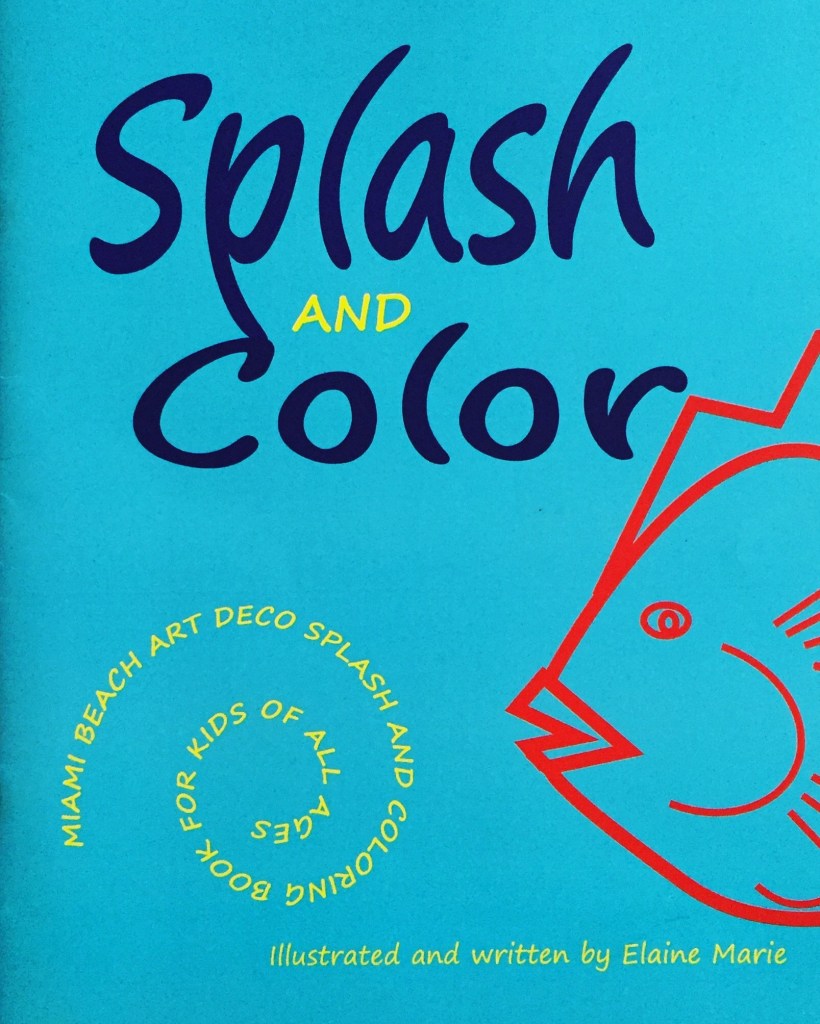
“What should the ages be for the coloring book?” “Four to nine year olds. Little kids ‘scribble and scrabble’ and I’ve seen nine year olds color.”
“What should I call it?” “Teen Coloring book.” “Do you know what a teen is?” “No!”
“Well, I’m not calling it that.” I decided on “Splash and Color” without telling him. My ego had taken enough beatings.
A few weeks later, I returned with what I hoped would be the final edit. “Good job, Grammy. I am proud of you,” he beamed. “Wow! Thanks, grandson.” Now to get it printed I thought…
As I read the publisher’s guidelines, I breathed a sigh of relief. My grandson had prepared me well.
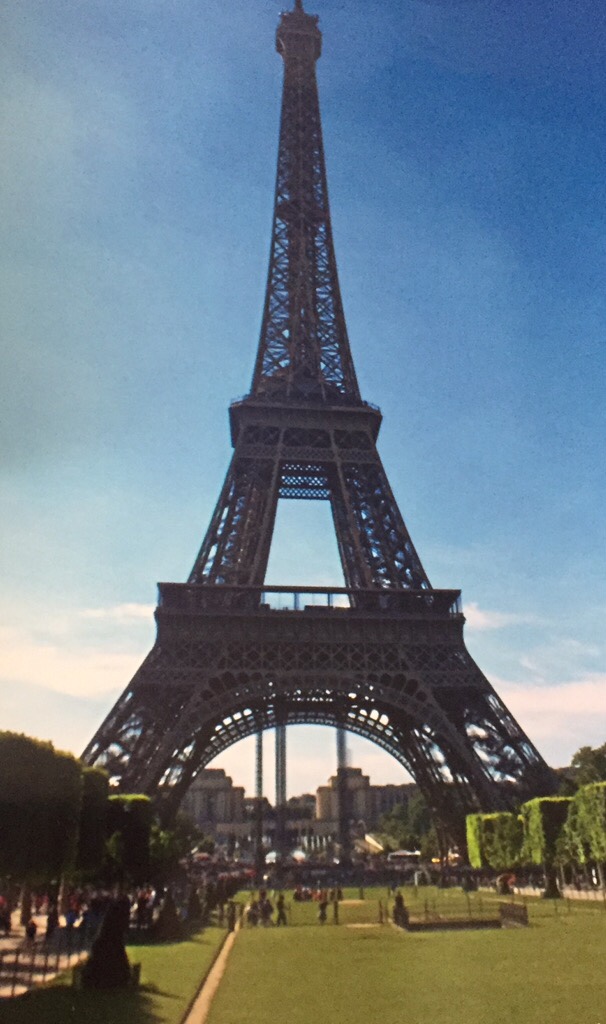
On my first visit to Paris, I stayed at the Hotel de la Tulipe, a wonderful inn located near the Eiffel Tower. I traveled with a group of artists headed to Monet ‘s Garden in Giverny, France.
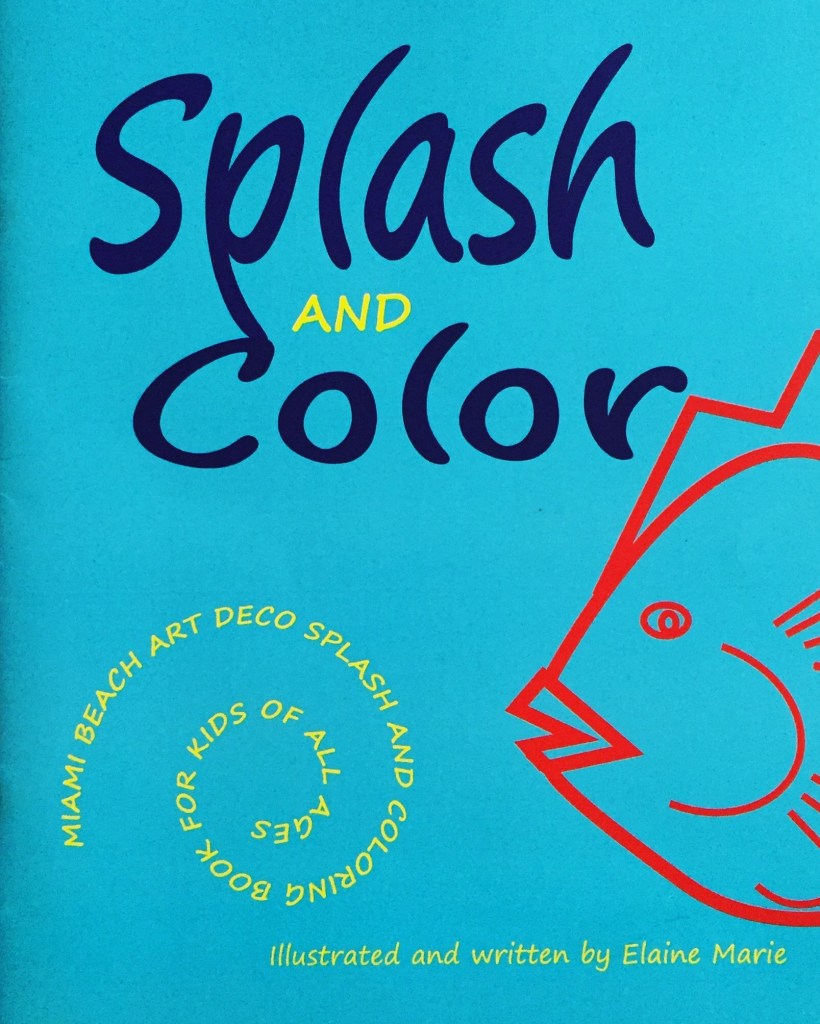
During my stay at the hotel, I befriended the Inn Keeper who told me about his creative and compassionate 5 year old. It seems his son wanted to make signs so tourists would not get lost in Paris. He showed me photos of the drawings.
The next day, I gave the Inn Keeper a copy of my Art Deco coloring book, “Splash and Color,” for his son. The following day much to my surprise, he told me his son had almost finished the coloring book and was researching the Internet to see what the actual buildings looked like.
Talking about leaps and bounds…
This book is as much about kindness as it about art. In the book, Lily Brown’s Paintings, children enjoy her playful and happy world. Lily’s interactions with the characters and her family are full of love and compassion.
A walk to school becomes an imaginative journey with the trees coming alive and bowing to Lily. Her painting of the corner market brings joy.
Lily explores and sees the world through her art. The illustrations by E.B. Lewis in the book are vivid and colorful. They bring the book to life.
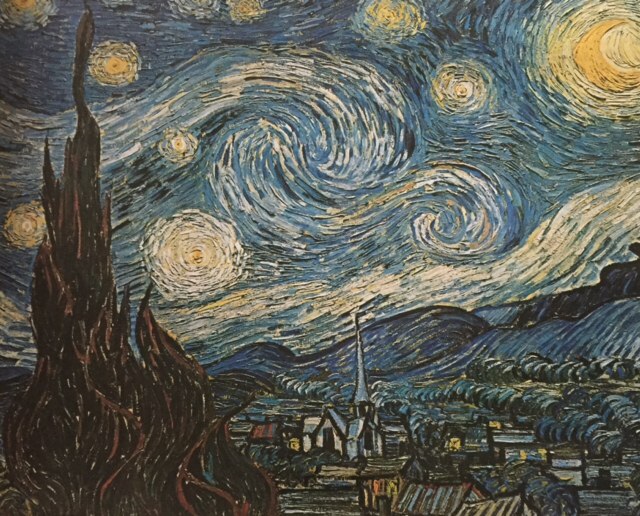
The illustrator uses several artists like Van Gogh and Gauguin for inspiration. This is a great book to use to introduce children to art history on a level they can comprehend. It is a useful tool help children prepare for an outing to a museum.
To learn more about the creation of the art in the book, check out the link on Lily Brown’s Paintings.
 Multicultural Art 4 Kids