Discover fun and exciting ways to build literacy skills through art. Explore the richness of cultures and traditions through creative expressions.
When the great artist, Katsushika Hokusai, died in his 90s, his last words were said to be a plea for just five or 10 more years to paint.
Hokusai is Japan’s most celebrated artist. He inspired the French Impressionist. Hokusai did paintings, wood prints, book illustrations, signs, and more. He was a visionary who went against tradition and used Prussian Blue instead of black and other innovations.
He led the way in subject matter; painting landscapes, still lifes, etc.
When he was in his mid 60s and early 70s, he created his greatest work, a series of color wood prints, 36 views of Mount Fuji that included his masterpiece “The Great Wave.”
The Harlem Renaissance was a celebration of African American culture in the 1920s and 1930s. It was a rebirth of African American arts. Workshops highlight art by Aaron Douglas, Jacob Lawrence, Romare Beardon, Augusta Savage and William Johnson.
Thousands of African Americans migrated to the North between 1900 and 1920 to escape economic hardship and racism and to search for human dignity and financial opportunity.
The veterans of World War I who had fought “to make the world safe for democracy” were determined to make democracy work at home.
From this mass migration, urbanization, and military participation, a dynamic artistic community evolved.
The Walter O. Evans Collection of African American Art by Andrea D. Barnwel
I love the artist Jacob Lawrence. I’m not alone —-one of his paintings recently broke an auction record to become among the most expensive works by an African American Artist. Lawrence depicted many social events in his paintings.
In the Jacob Lawrence workshop, students will learn about the US executive, legislative and judicial branches of government and discuss the role of the artist in society. Students will create a painting inspired by Jacob Lawrence. This curriculum meets National Educational Standards.
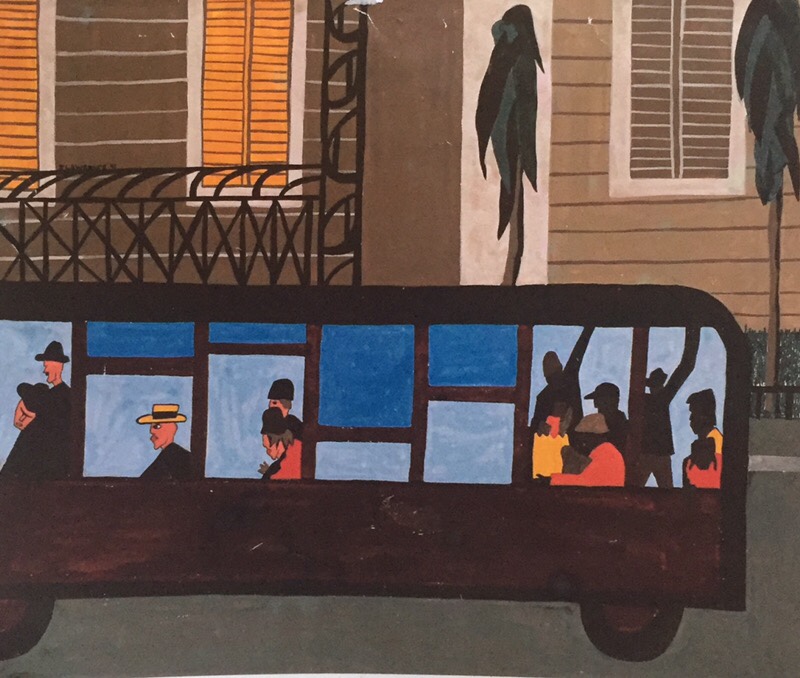
Jacob Lawrence’s painting “Bus” depicted life in the segregated South. The painting shows a bus with whites comfortably seated and blacks jammed in the back with empty seats separating the two races. It is painted in his signature gouache on paper with brown, blue and red color scheme.
To learn more about the Jacob Lawrence workshop and others, visit my website.
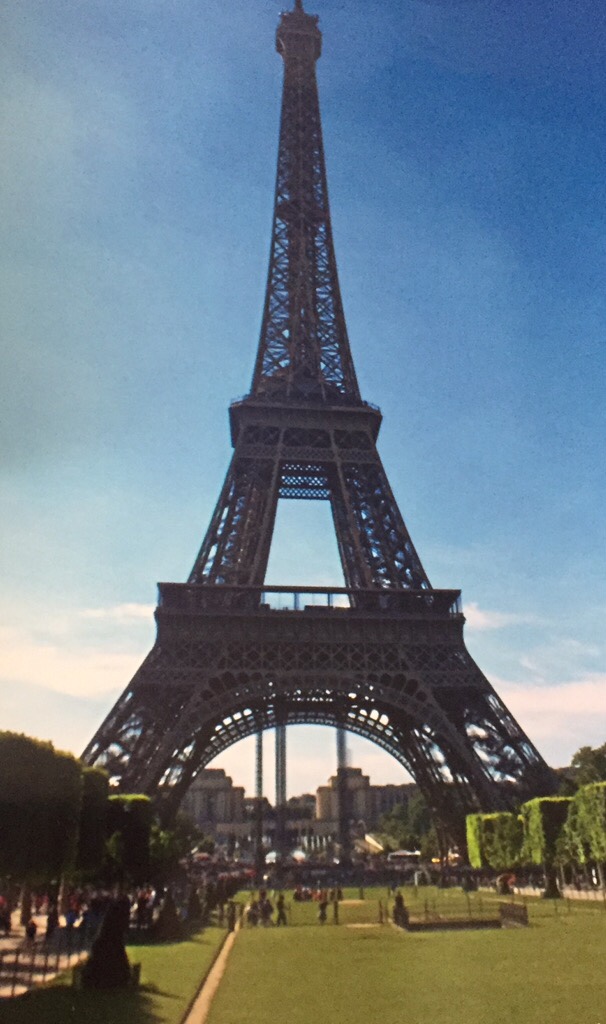
On my first visit to Paris, I stayed at the Hotel de la Tulipe, a wonderful inn located near the Eiffel Tower. I traveled with a group of artists headed to Monet ‘s Garden in Giverny, France.
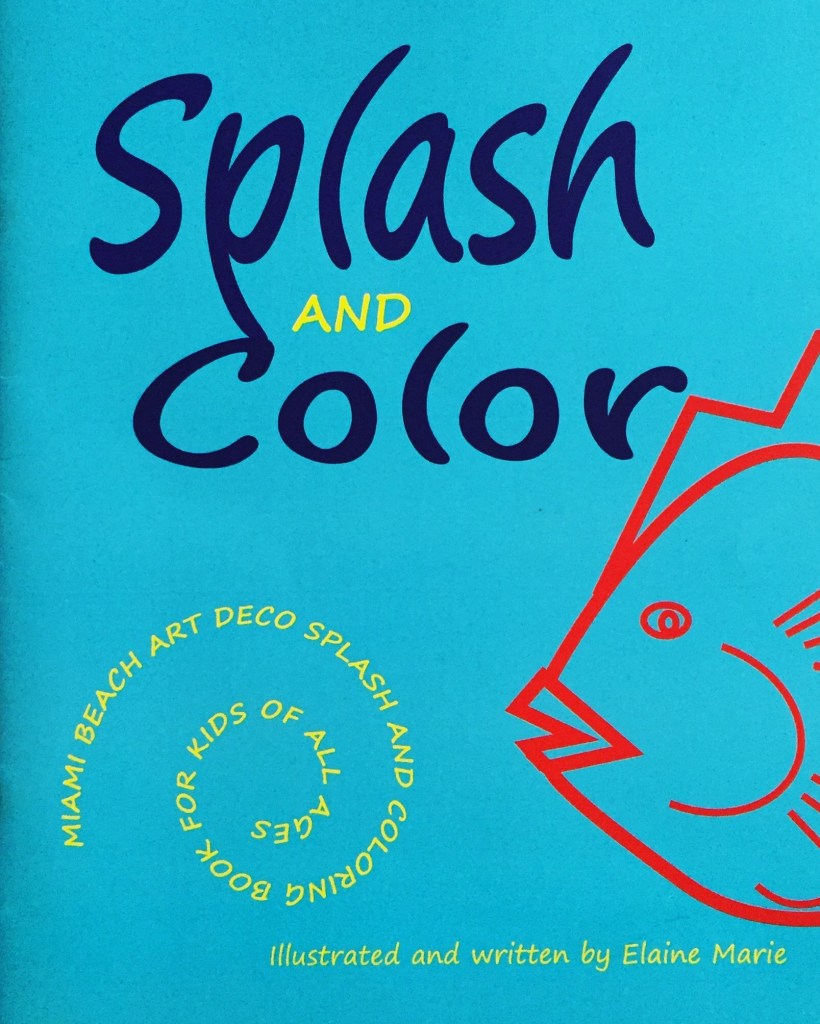
Grab, your flip flops and imagination. Explore Miami Beach’s Art Deco District through the eyes of a child in this delightful coloring book.
During my stay at the hotel, I befriended the Inn Keeper who told me about his creative and compassionate 5 year old. It seems his son wanted to make signs so tourists would not get lost in Paris. He showed me photos of the drawings.
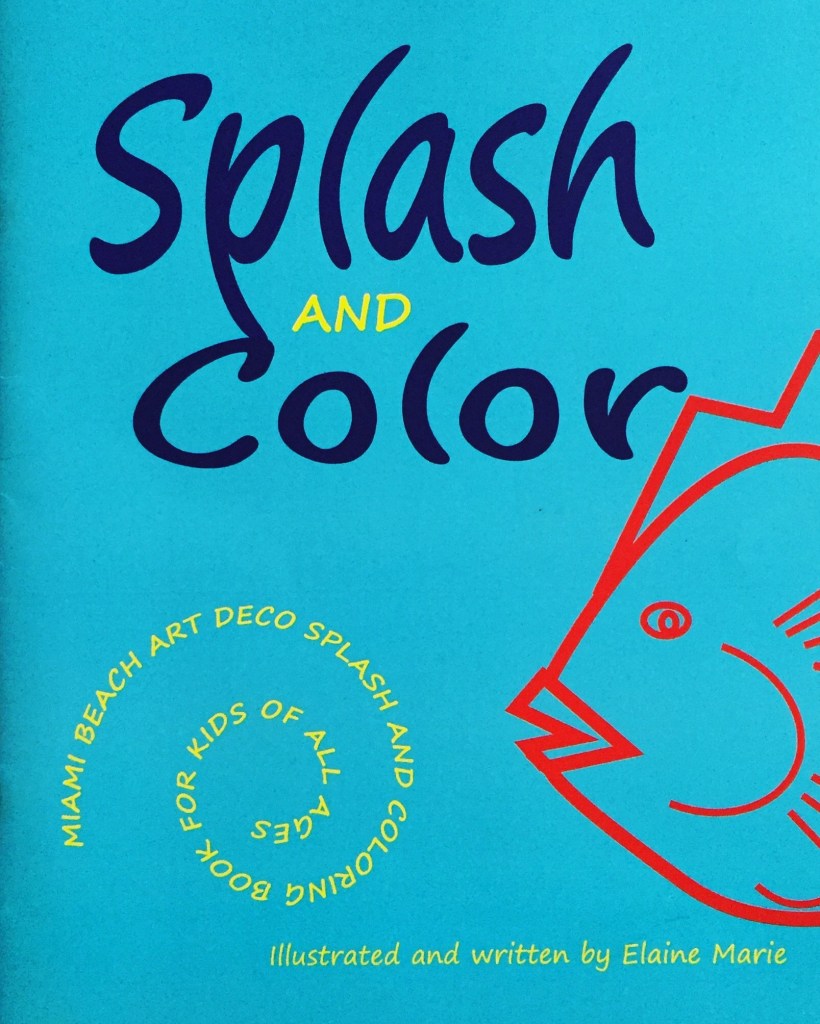
The next day, I gave the Inn Keeper a copy of my Art Deco coloring book, “Splash and Color,” for his son. The following day much to my surprise, he told me his son had almost finished the coloring book and was researching the Internet to see what the actual buildings looked like.
Children have an insatiable curiosity. I’m glad my coloring book inspired this young Parisian.
Explore my a new website to see this coloring book, creative lesson plans and art.
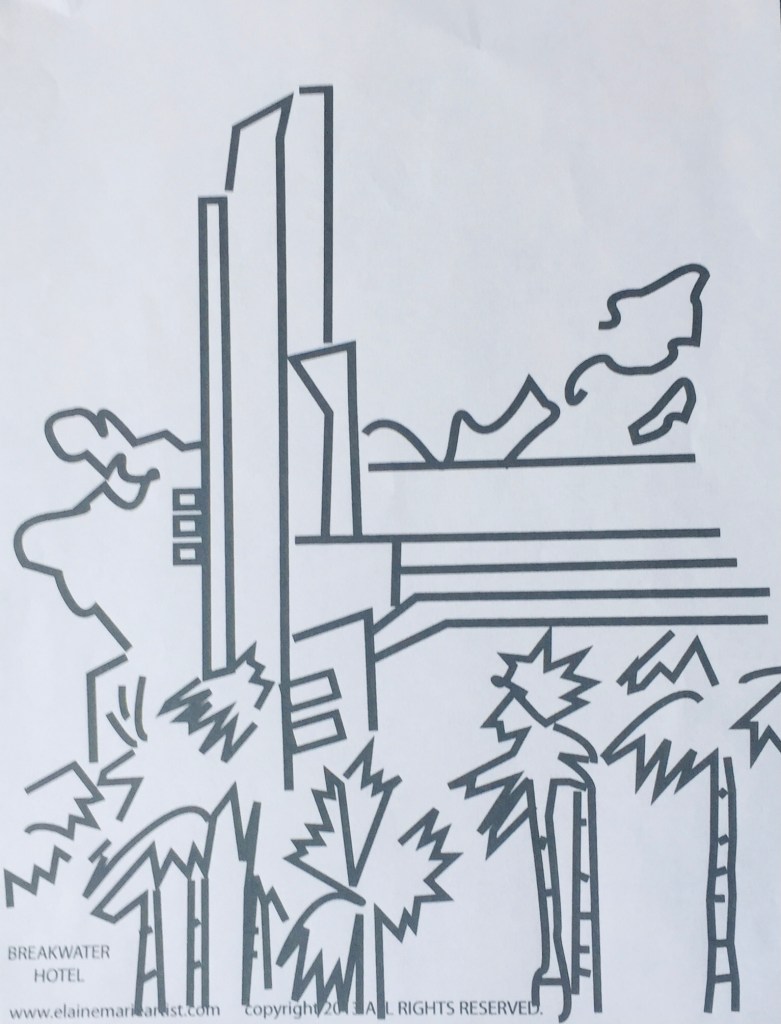
A page from Splash and Color Art Deco Coloring Book. It features a drawing of the iconic Breakwater Hotel in Miami Beach. The front design of the hotel is inspired by a ship’s masthead.
A Splash of color.
A dash of fun.
People and dogs on the run.
Bikes to ride
Scooters to thrill.
Pirates on land,
Pirates on wheels.
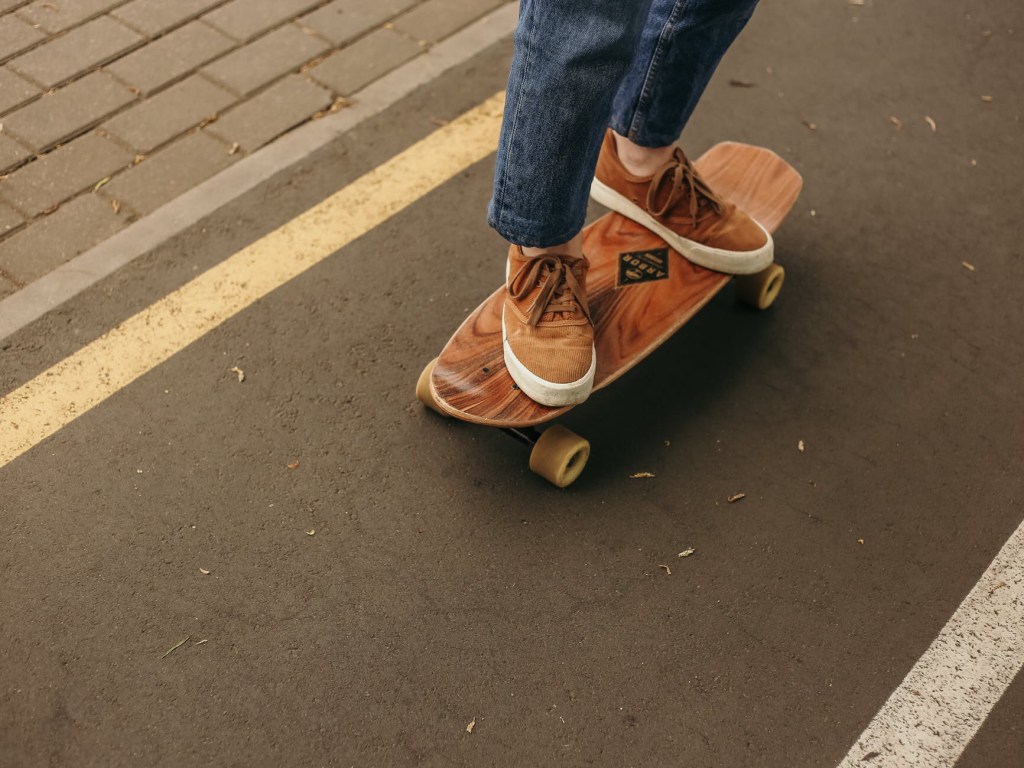
Skaters zooming by.
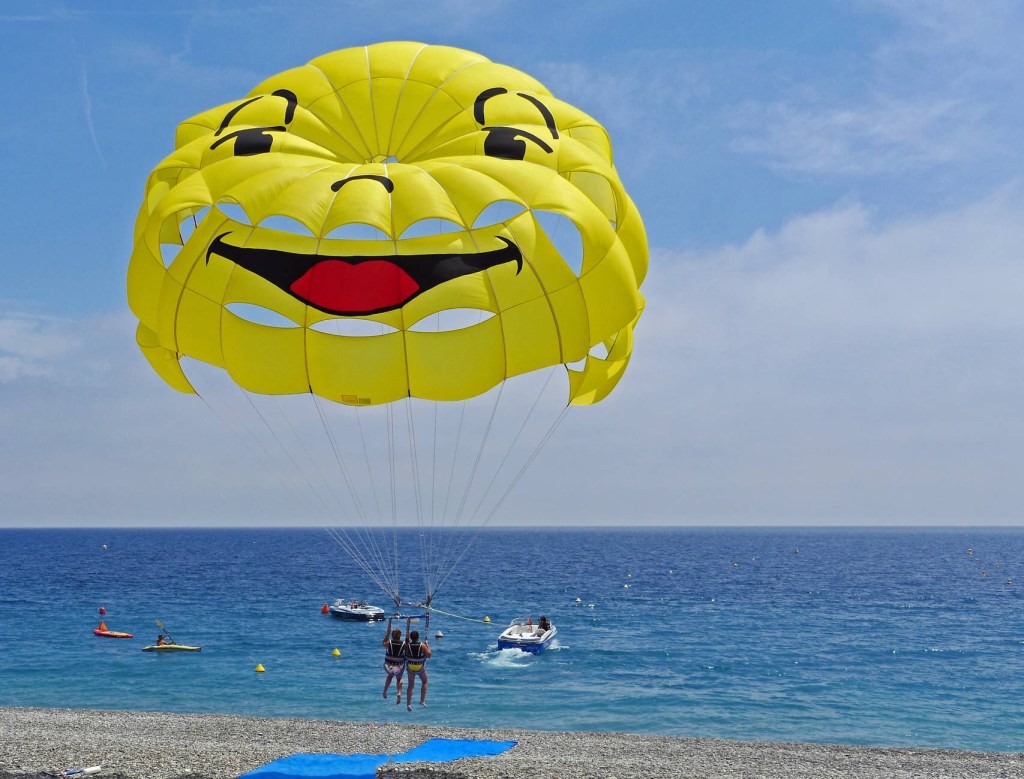
Parasails in the sky.
A beach to swim in
Or just to float
And those silly buildings
that look like boats.
Copyrighted by Elaine Marie Artist
Check out my website to purchase my limited edition Miami Beach Art Deco Coloring Book.
Studies show that there is a correlation between art and other achievements.
“Every child is an artist. The problem is how to remain an artist once one grows up.” I love this quote by Picasso. It brings to mind the precious first drawings my three children created during childhood. I was distraught the other day when one of these fragile keepsakes began to tear inside of a frame. It seems the backing of the frame had come apart along with the drawing.
Society is often good at destroying creativity as well. As children grow up, creativity is often discouraged. Creativity while fragile is the backbone of society. When archeologists study past cultures they often gauge their development by the complexity of the art produced.
There is hope. Many schools have Science, Technology, Art and Math (STEAM) curricula. Creativity is a great way to keep students engaged especially now that so many students are studying online.
Studies show that there is a correlation between art and other achievements. A report by Americans for the Arts states that young people who participate regularly in the arts (three hours a day each week through one full year) are four times more likely to be recognized for academic achievement, to participate in a math and science fair or to win an award for writing an essay or poem than children who do not participate.
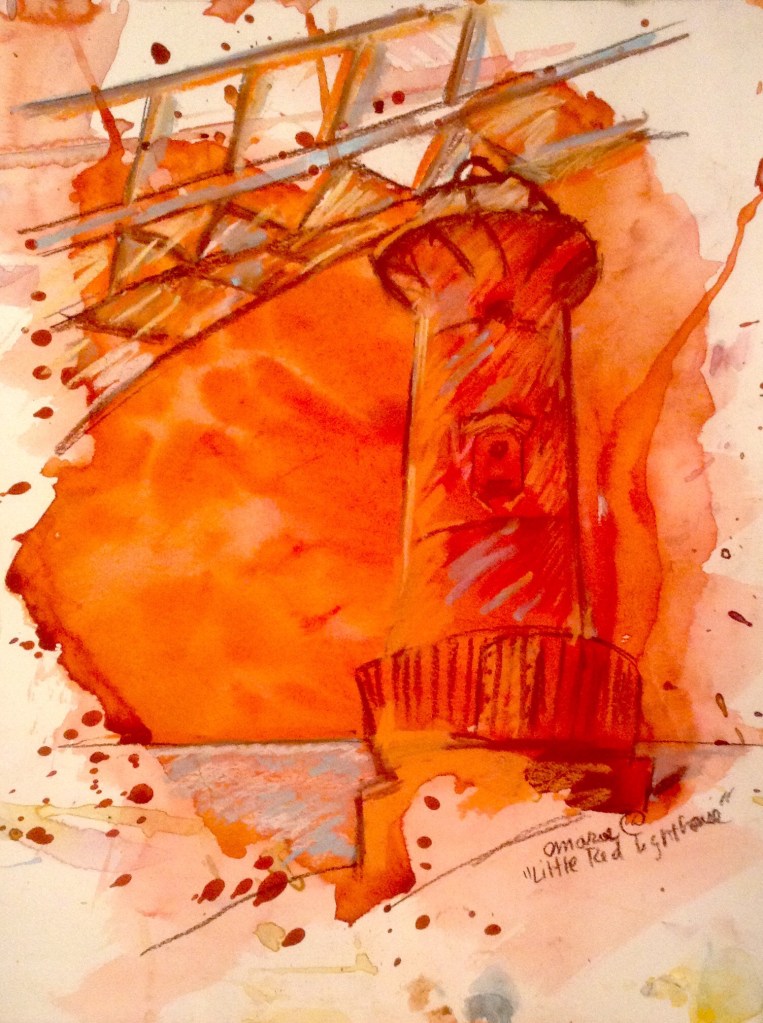
The iconic Jeffrey’s Hook lighthouse rose to fame due to the popularity of the book “The Little Red Lighthouse and the Great Gray Bridge” by Hildegarde W. Swift and Lynd Ward. This story was so compelling that it inspired hundreds of children to write letters that saved lighthouse. I love books that inspire children to make a difference. Taking a clue from the book I included the bridge in my painting of the lighthouse.
This workshop engages children in an exciting exploration of art and social science. Children will learn about civic responsibility, the role of government and how they can make a difference.
EDUCATION STANDARDS
SS.KA2.3 Listen to and retell stories about people in the past who have shown character ideals and principles including honesty, courage and responsibility.
SS.K.E.1.3 Describe different kinds of jobs that people do and tools or equipment used.
SS.1.A.2.2 Compare life now and in the past.
SS.1.C.1.2 Give examples of people who have the power and authority to make and enforce rules and laws in the community.
SS.2.E.1.3 Recognize that the United States trades with other nations to exchange goods and services.
VA.1.2.3.4.5 Develop the skill to use art to organize objects sequentially.
LAF.1.W.1.2 Write information in which they name a topic, supply some facts about the topic.
Length 1 ½ – 2 hours
Topic: The Role of lighthouses and light keepers
Objective
Children will learn how lightkeepers and lighthouses contribute to the welfare and economic well-being of the United States. Students will discover the function of lighthouses such as warning against visible shipping hazards. They will learn the role of government and how to impact their neighborhood and the world around them.
When faced with a new project, it’s common to seek subject matter experts for guidance. When I began the task of illustrating my Miami Beach Art Deco coloring book, I sought the advice of my five year old grandson. As I worked on my thumbnail sketches, he noted, “Grammy, books have spines.” This was the first of his insightful remarks.
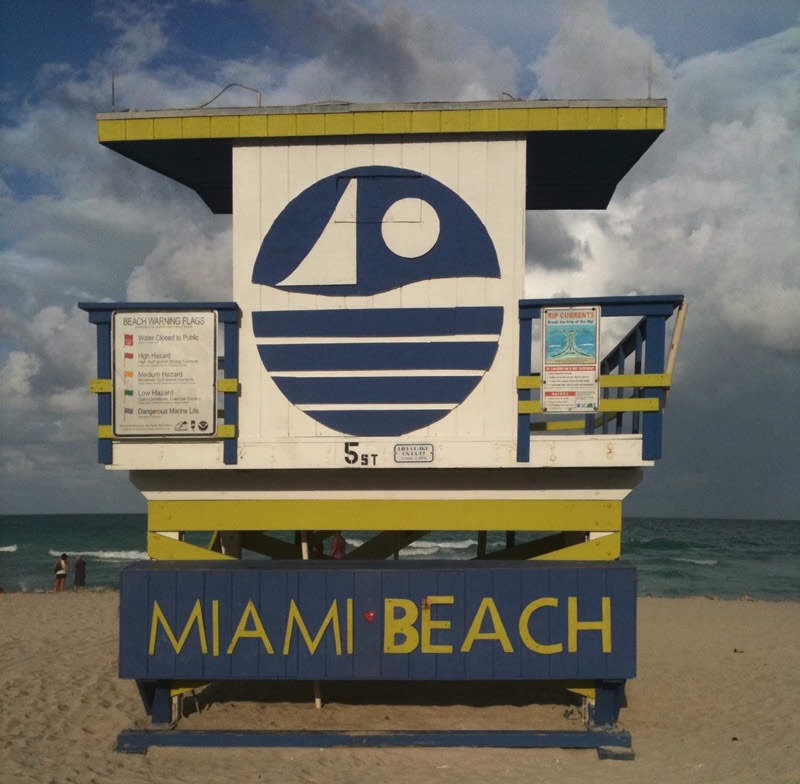
Life guard towers in Miami Beach capture the whimsical spirit of the city.
When I came back with my drawings he observed, “You don’t have any people in it. You need to draw some kids doing fun things.” “Well, I do see people walking their dogs…” “Yes, what about a parachute…this sky looks empty.” “I don’t see parachutes at South Beach but I do see parasails.” “What’s that?” he inquired. Not sure that I could explain it, I drew a sketch. “Cool!” he replied. “I guess I could draw some clouds in the sky,” I offered.
“I want to draw on this robot.” I decided to include dashed lines for tracing instead of making it a static object. “This building needs something.” “I did leave out some windows,” I explained. So much for my first edit…
I literally went back to the drawing board and returned with the changes he suggested. “Where’s the parachute?” he insisted. “Well, I drew clouds instead.” He wasn’t impressed and maybe a bit disappointed. Still, he said it was much better than before.
“These kids need helmets on their heads. They could get hurt!” “But they look so much cooler without the helmets,” I protested. “These kids need helmets!” “Alright,” I agreed.
“What should I do about the front of the book? I’ve seen a mermaid on a building I could draw.” “No, because people will think it is just for girls.”
My Miami Beach Art Deco coloring book is a fun educational tool with interactive activities and drawings of the Art Deco Building in the Miami Beach Art Deco District.
“What should the ages be for the coloring book?” “Four to nine year olds. Little kids ‘scribble and scrabble’ and I’ve seen nine year olds color.”
“What should I call it?” “Teen Coloring book.” “Do you know what a teen is?” “No!”
“Well, I’m not calling it that.” I decided on “Splash and Color” without telling him. My ego had taken enough beatings.
A few weeks later, I returned with what I hoped would be the final edit. “Good job, Grammy. I am proud of you,” he beamed. “Wow! Thanks, grandson.” Now to get it printed I thought…
As I read the publisher’s guidelines, I breathed a sigh of relief. My grandson had prepared me well.
On my first visit to Paris, I stayed at the Hotel de la Tulipe, a wonderful inn located near the Eiffel Tower. I traveled with a group of artists headed to Monet ‘s Garden in Giverny, France.
Grab, your flip flops and imagination. Explore Miami Beach’s Art Deco District through the eyes of a child in this delightful coloring book.
During my stay at the hotel, I befriended the Inn Keeper who told me about his creative and compassionate 5 year old. It seems his son wanted to make signs so tourists would not get lost in Paris. He showed me photos of the drawings.
The next day, I gave the Inn Keeper a copy of my Art Deco coloring book, “Splash and Color,” for his son. The following day much to my surprise, he told me his son had almost finished the coloring book and was researching the Internet to see what the actual buildings looked like.
 Multicultural Art 4 Kids